
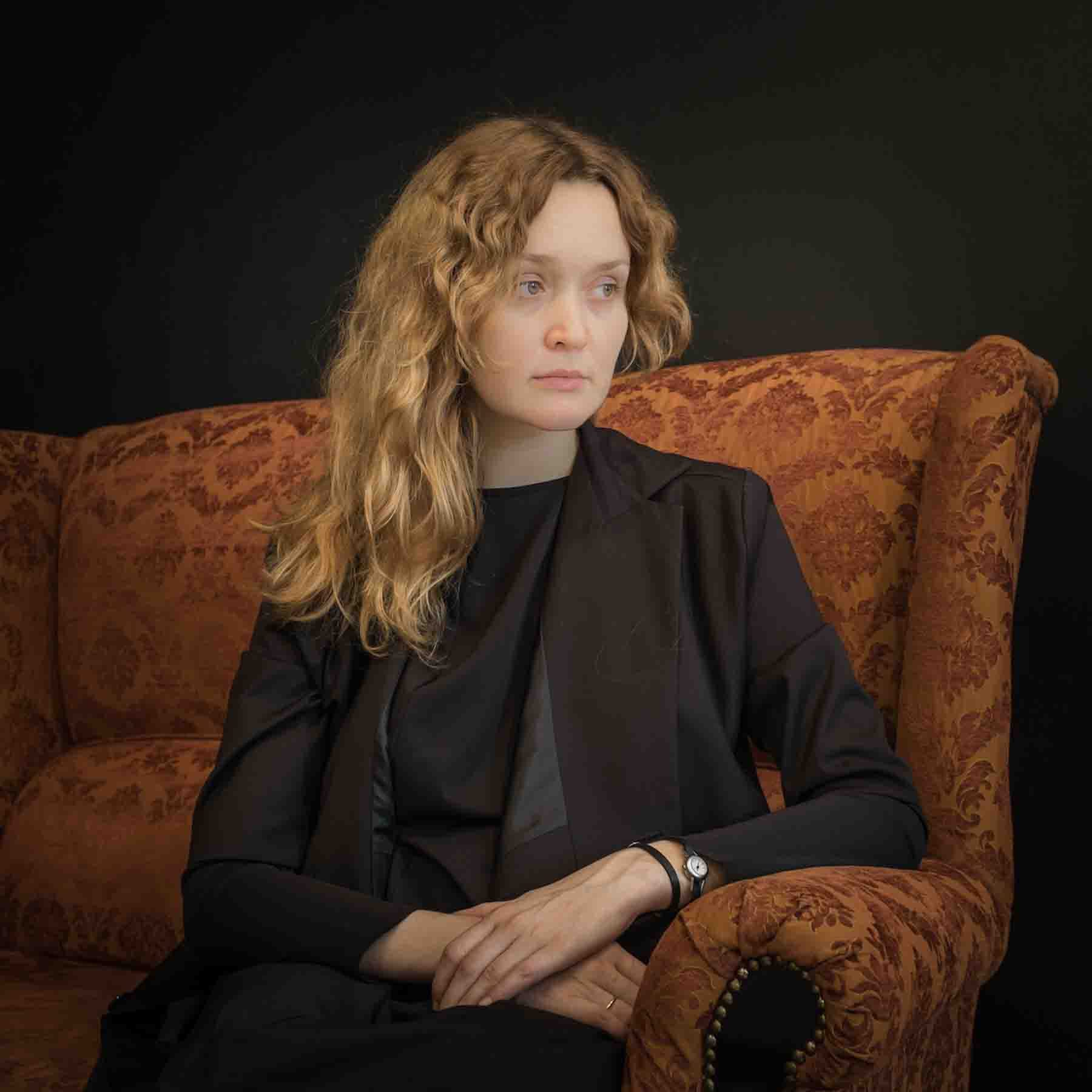
Philippe Herbet “Les filles de Tourgueniev” editions bessard
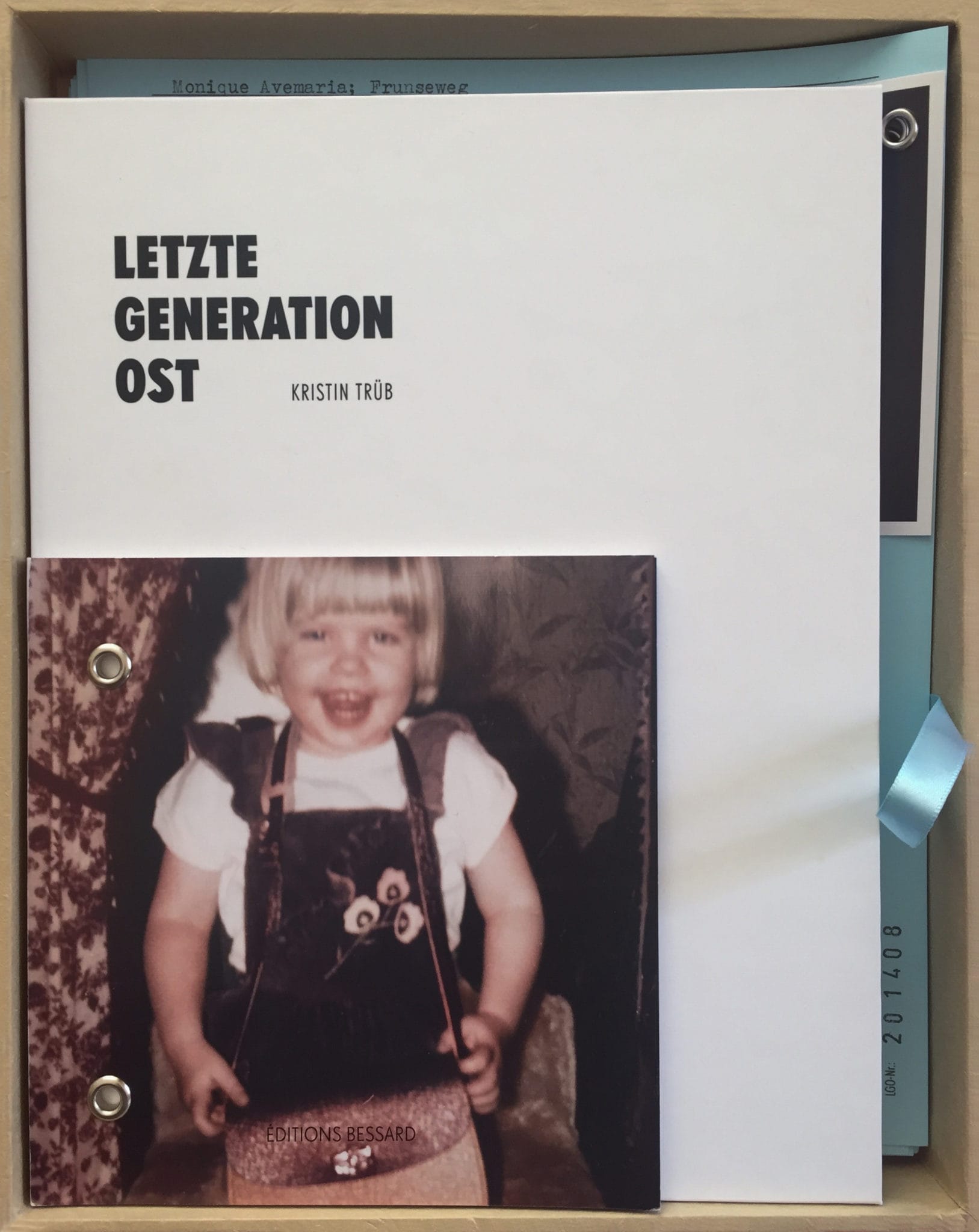
 Their families corresponded to the propagandized principles, they received socialist education in their early years and lived in the typical tower blocks in Hagenow. Naturally, since the collapse of the former GDR, much has changed. Interviews with nine selected representatives of that generation as well as portraits and various photographs create an impression of the memories and experiences of the last generation east.
Ihre Familien entsprachen dem propagierten Leitbild, sie erhielten eine sozialistische frühkindliche Erziehung und wohnten in einer durchschnittlichen Plattenbausiedlung in Hagenow. Nach der Wende hat sich viel verändert. Interviews, Portraits und Fotografien aus ihrer Plattenbausiedlung verdichten sich zu einem Gesamteindruck ihrer Erinnerungen.
My Lagos, capitale monstre et populeuse, par le photographe Robin Hammond,
Publié par Fabien Ribery le 19 janvier 2017
Il se pourrait très bien que l’Afrique – trente millions de kilomètres carrés, cinquante-quatre Etats – invente les lignes de notre futur, et nous refaçonne à la mesure de sa démesure.
En 2030, Lagos comptera vingt-cinq millions d’habitants.
Dans la capitale du Nigeria, où les populations affluent, les capitaux des investisseurs jouant aux dés transforment la ville en un gigantesque territoire d’aventures.

Les imaginaires sont écrasés par le calcul, avides d’argent.
Les imaginaires s’ouvrent, participant à la créolisation du monde, que prophétisait à juste titre le philosophe poète Edouard Glissant.

Consumériste, déchirée, souffrant de tachycardie, Lagos est aussi tourbillon, vitalisme, couleurs, mouvement permanent.
Soumise à la souveraineté de la technique, cruelle, dévoreuse de chairs humaines, Lagos est aussi tisseuse de liens, créatrice d’expériences existentielles nouvelles, vérité de rires, rythmes inédits.
 The wedding of Funmi Olojede (bride)
Sa puissance est une joie, sa puissance est une peine.
Lagos est un chaudron, volcan touillé par une jeunesse désireuse de sauver sa peau, et de saliver, déglutir, jouir le vaste monde à partir du point d’incandescence qu’est son désir irréductible d’être là, pleinement présente, dans l’hyperconnexion mondialisée à laquelle elle veut participer sans frein.
Pas de nostalgie, mais une humanité se réinventant, identique et différente, adepte d’une autre Raison, moderne, non impérialiste, plurielle, attentive à la vie spirituelle et au tempo propre de chacun, ce qui serait la définition de Lumières africaines.
Pas de passéisme, mais de l’effervescence, du bouillonnement, et des habits d’Arlequin pour fuir dans les apparences.
Le corps sera de grande santé, ou ne sera pas, mobile, fervent, très savant, et joueur-menteur.
’intensification de l’existence poétique au cœur de la catastrophe est aujourd’hui l’enjeu majeur.
Dans le bruit, la musique, le tumulte, Lagos invente un destin, qui ne pourrait ne pas être que local, mais de portée universelle.
C’est ainsi que l’immense photographe néo-zélandais Robin Hammond, dans un livre finement ouvragé édité par les Editions Bessard (format horizontal majestueux, couverture cartonnée unique pour chaque exemplaire, doublée d’un papier plié provenant de posters nollywoodiens, typographie très soignée), représente dans My Lagos une capitale monstre et populeuse, à la fois très noire et multicolore.
Au spectateur égaré dans le labyrinthe de ses images, Robin Hammond offre, dans une série de petits cahiers dépliables, insérés dans un format réduit au mitan des doubles pages de sa fresque africaine, des interviewes en anglais permettant de rencontrer des personnages, dont on se dit qu’il pourrait être des acteurs de ce grouillant Nollywood, où le Nigeria expérimente le mise en scène d’elle-même.

Ville de contrastes considérables, impitoyable et donnant pourtant tout à l’œil habile du photographe sachant la révéler dans ses multiples dimensions, l’indomptable Lagos est ici approchée en cinq chapitres – Building Lagos, Big Religion, Middle Class, Nollywood, Fashion – qui sont autant de portes d’entrées ouvrant sur les autres, car la cité dantesque est aussi celle de tous les enchantements.
Avec My Lagos, les Editions Bessard frappent une nouvelle fois très fort, et l’on se plaît à désirer rester longtemps encore sur le ring des images d’un livre construit comme un macrocosme.
Joseph Conrad terminait Au cœur des ténèbres par le célèbre « L’horreur ! L’horreur ! » – derniers mots prononcés par Kurtz durant son agonie.
Il semble qu’on puisse lui préférer aujourd’hui la formule magique de Nelson Mandela : « Je suis parce que nous sommes. »
My Lagos, ou l’avenir du monde, désirable, inquiétant, incompréhensible, babellique, passionnant, à feu et à sang.

Robin Hammond, My Lagos, design Cyrielle Molard, Editions Bessard, 2016 – livre disponible auprès de l’éditeur
FABIEN RIBÉRY
À propos de l’auteur : L’intervalle, blog littérature, cinéma, photographie, gestes artistiques, sciences humaines, philosophie / Entretiens et chroniques
Fabien Ribery, auteur, enseignant, agrégé de lettres modernes, journaliste free lance HERE THE LINK: https://fabienribery.wordpress.com/2017/01/19/my-lagos-capitale-monstre-et-populeuse-par-le-photographe-robin-hammond/
I really enjoy Edition Bessard´s publications. And I miss the small series with a print, among them there is a kind of preview of Robin Hammonds book My Lagos.
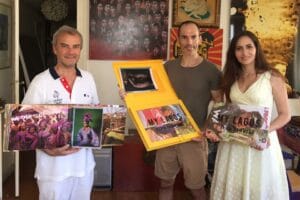 Lagos is home to the richest people in the richest country in sub-Saharan Africa (with a GDP of over 500 billion dollars), but the riches have hardly trickled down, it is also one of the most unequal cities in the world (ranked in the top three most unequal for income earned). The huge numbers of poor eking out a living here have reportedly made this the 4th worst place to live in the world. But Lagos is seeing a rapidly rising middle class and this city of enormous contrasts is fast becoming internationally known as Africa’s hub of creativity, fashion and business. Photo Robin Hammond/Panos

about the Joan Blog: This blog is about things I own, or rather things that I have at home that might be interesting. I work as a copywriter but pictures occupy a large part of my life. As photography hanging on the walls, at museums and galleries and in my ever-growing collection of photography books. And all the pictures I take myself. It´s pictures that I intend to show here, too. Den här bloggen handlar om allt jag äger, eller rättare sagt sådant som jag har hemma som kan vara intressant, på något sätt eller högst personligt. Jag är förvisso copywriter men bilder upptar en stor del av mitt liv. I form av fotografi som hänger på väggarna, som man kan se på museer och gallerier och som finns i min ständigt växande samling av fotoböcker. Och dem jag tar själv. De bilderna tänker jag visa här också. Jag äger ju bilderna. Däremot finns inte motiven kvar i verkligheten.
HERE THE LINK: http://johanbrink.blogspot.jp/2017/01/16-from-16-best-photo-books-from-last.html?view=classic

Révélé notamment en Europe par son ami Pierre Bessard avec le livre The brightest light runs too fast (Editions Bessard, 2014), devenu rapidement culte (une couverture thermique a permis de déjouer la censure), les éditions allemandes Taschen offrent aujourd’hui à Ren Hang un rayonnement mondial en lui consacrant une superbe monographie sous couverture rouge cartonnée
here the link: https://fabienribery.wordpress.com/2017/01/18/un-genre-de-burlesque-pornographique-par-le-photographe-ren-hang/

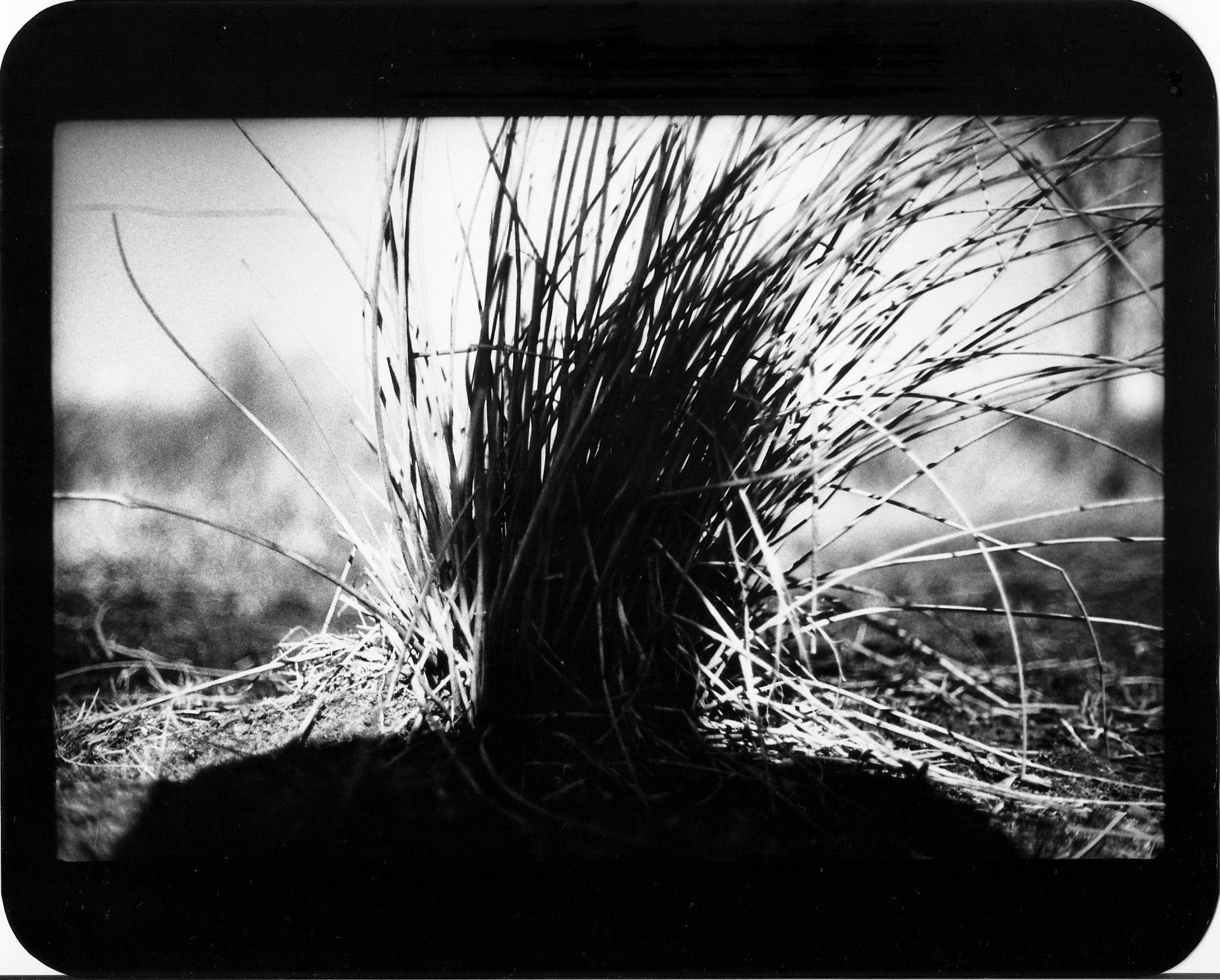
 “I started working on the Self Portraits series in 2010.I was shooting in Italy in the summer and while looking for animals to photograph in the countryside, I looked through the camera and saw a reflection of my shadow on an unpaved road against a mountain.
It was a clear day and I was not far from the place where I was born.
From that moment, I decided to build a project on myself. No more people or animals to chase, no more sneak shots of strangers, all I needed now was right in front of me, still, posed, shouting for me to just press the button.
So for three years and hundreds of sunny days, I wandered around the countrysides of Italy and the United Kingdom, posing different shadow positions in front of the camera. As the project progressed, I started to construct my pictures as though the shadows were an integrated element of the landscape that were coming to life because of my interaction with the environment.
Working with a removable viewfinder camera, a Miranda that once belonged to my father, the photographs were taken from a waist level perspective, casting my reflection onto natural, organic surfaces as grass, soil, rocks, hay, plants and trees.
I loved working with these textures and the way they responded to my presence and what they gave back in return, was continually fascinating.
I came across many different surfaces: green and leafy, white and rocky, yellow and grassy, brown and woody.
It was the act of casting my black presence onto colours and shapes that kept me shooting images.
Seeing my shadows distorting, taking form and coming to life against the sunshine, was like being in my darkroom, printing with hands and body, under the light of the enlarger.
Moving around while taking pictures of my shadow was like marking the territory, exploring a new, fragile dimension made out of nothing but light”
Giacomo Brunelli, 2016
ISBN: 979-10-91406-42-0
Clothbound hardback, 25 pages
20 tritone plates, 270mm x 190mm

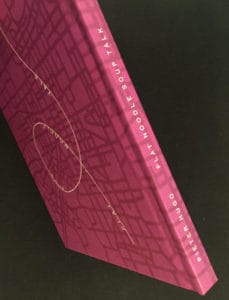
A lire sur le blog littéraire L’Intervalle : L’insurrection de la pudeur, par le photographe sud-africain Pieter Hugo Publié par Fabien Ribery
Pieter Hugo est un colosse, dont les images sont chaque fois des chocs visuels, parce qu’elles vous regardent sans ciller, et que la franchise effraie quand elle n’attend pas de réponse.
Pierre Bessard, qui est son ami, lui consacre un ouvrage, intitulé de façon tendrement ironique Flat noodle soup talk, où les visages qui vous contemplent, en souriant, avec mélancolie, douceur, ou défi, sont autant de natures mortes.
Pieter Hugo photographie des êtres ayant compris que son objectif les transforme en fantômes, à moins que, sans véritablement oser se le formuler, ils ne se soient toujours considérés, l’hypothèse n’est pas absurde, comme des ombres mouvantes.
Un fruit pourrit, il éclate, le livre s’ouvre, puis se ferme, dans une odeur de grenade écrasée. Des couples se sont mariés, des amants se sont étreints, des jeunes femmes se sont fait tatouer ou percer les joues, d’autres encore ont subi des opérations, ou s’apprêtent à dîner en famille. Il ne s’est rien passé, la vie a passé, la mort n’a cessé de travailler.
Ouvrez une noix, écartelez une clémentine, vous y verrez peut-être votre cerveau, ou votre visage, ou votre sexe, ou vos entrailles.
Pieter Hugo est un métaphysicien : il sait bien que chacun se bat contre la solitude, ou l’isolement, et que les jours sont généralement bâtis d’amertumes.
Le matérialisme, marxiste ou consumériste, révèle son impuissance, incapable de combler notre besoin de consolation.
Une Mercedes caparaçonnée sort du garage, un enfant naît, des œufs se cassent sur le sol, une fissure apparaît au plafond, un vieil homme nu, couché, se prépare à ne plus revenir de son prochain sommeil.
Les corps nus chez Hugo sont émouvants, parce qu’ils ne jouent pas à être sensuels, et qu’ils montrent que la séduction est un combat que l’on mène vaillamment en le sachant perdu d’avance.
beijing_2015_439_v1x
Les rêves d’utopies politiques sont des histoires anciennes. Reste l’effort très beau pour se tenir debout, seuls ou ensemble, cuirassés de protections ou sans vêtement.
Pieter Hugo ne légende pas ses images. Nous sommes probablement en Chine, en tout cas en Asie, c’est-à-dire de l’autre côté du globe unifié par une dévastation que nous ressentons désormais à chaque instant, que l’on soit à Paris, Pékin ou au Cap.
beijing_2015_1208_v2x
Et si chacun accepte ici d’offrir au photographe sud-africain son image avec la plus grande pudeur, c’est que peut-être, face à l’incommensurable vertige qu’impose un monde à l’agonie, ce sentiment expose sans le vouloir l’un de nos derniers noyaux d’humanité partageable, telle une ultime et modeste insurrection de l’espèce humaine face à la menace de son anéantissement.
01-fnst
Pieter Hugo, Flat noodle soup talk, design and book concept Ramon Pez, éditions Pierre Bessard, 2016 – typeface Grot 10
beijing_2015_1302_v2x
HERE THE LINK: https://fabienribery.wordpress.com/2016/11/21/linsurrection-de-la-pudeur-par-le-photographe-sud-africain-pieter-hugo/
“I started working on the Self Portraits series in 2010.I was shooting in Italy in the summer and while looking for animals to photograph in the countryside, I looked through the camera and saw a reflection of my shadow on an unpaved road against a mountain.
It was a clear day and I was not far from the place where I was born.
From that moment, I decided to build a project on myself. No more people or animals to chase, no more sneak shots of strangers, all I needed now was right in front of me, still, posed, shouting for me to just press the button.
So for three years and hundreds of sunny days, I wandered around the countrysides of Italy and the United Kingdom, posing different shadow positions in front of the camera. As the project progressed, I started to construct my pictures as though the shadows were an integrated element of the landscape that were coming to life because of my interaction with the environment.
Working with a removable viewfinder camera, a Miranda that once belonged to my father, the photographs were taken from a waist level perspective, casting my reflection onto natural, organic surfaces as grass, soil, rocks, hay, plants and trees.
I loved working with these textures and the way they responded to my presence and what they gave back in return, was continually fascinating.
I came across many different surfaces: green and leafy, white and rocky, yellow and grassy, brown and woody.
It was the act of casting my black presence onto colours and shapes that kept me shooting images.
Seeing my shadows distorting, taking form and coming to life against the sunshine, was like being in my darkroom, printing with hands and body, under the light of the enlarger.
Moving around while taking pictures of my shadow was like marking the territory, exploring a new, fragile dimension made out of nothing but light”
Giacomo Brunelli, 2016
ISBN: 979-10-91406-42-0
Clothbound hardback, 25 pages
20 tritone plates, 270mm x 190mm
In his previous life, Pierre Bessard has worked as a photo-reporter for the Agence France Presse (AFP) as well as the press agency REA. He was also in charge of the photographic service in the French magazine VSD and directed documentaries for CAPA/ARTE. Familiar with Korea where he conducted several photographic surveys, he finally embarked upon a journey to China with his wife and children in 2008. Few years later in 2011, Bessard launched his own eponymous independent-publishing house based in Paris.
Bessard only works with ground-breaking artists, writers and curators, and supports challenging projects in book form by creating graphically unconventional artists limited editions. More than a simple publisher, he is a “fire-horse in constant motion” – as he describes himself – with a colourful personality. Qualities that enabled him to have established his publishing house as one of the leading in the field today. Although Bessard Editions has never applied to any grant or prize, the publishing house has already been rewarded internationally and included in authoritative publications. Such as Max Pam’s “Ramadan in Yemen”, cited in Martin Parr and Gerry Badger’s “The Photobook: A History” (London: Phaidon, 2004), and Bessard’s “Chattanooga the Green factory”, which was nominated at the TDC-Typography as one of the best in Typography and Design among 3289 books in competition (Tokyo: AZUR Corporation, 2013).
How would you describe your work as a publisher?
Aesthete and precursor, Bessard Editions’ goal is to slide the world of photography into different prisms: novelty and originality, passion and excellence. This requires openness to the world, and permanent intellectual curiosity. We live in a hyper-communicating and hyper-connected society. We need to be receptive, to observe, in order to develop new ideas. My role is precisely to synthetize all the information, the exchange coming from various sources, whether they relate to the technological, cultural, and critical amongst other fields.
This publishing house intends to rethink the book format, to assert a savoir-faire, and to explore all facets of creativity, including design, art, typography, graphic design, bookbinding, and so forth. It reflects harmony, extravagance, inspiration, and passion. It is my role as a publisher to promote such values. In order to do so, I travel a lot and everywhere with the intention of picking tendencies. I am equally interested in emerging and established artists, and many of those with whom I have collaborated with have published their first publication thanks to the Editions Bessard.
Alongside my work as a publisher, I also have other activities. I frequently give papers in conferences around the world in order to discuss the production of photo–books in more detail. As compared to other publishers, I would say I am closer to poetry than prose. Besides, I also have launched an artist residency in Beijing in partnership with the Rosewood Hotel. I invite artists to spend up to 15 days in a luxury hotel where food and accommodation are provided gratuitously. Thus far four photographers came and have worked – or are still working – on the publication of their adventures in China. For instance, Pieter Hugo’s “Flat Noodle Soup Talk” is the fruit of this residency in Beijing. It was the first time that he photographed outside Africa. He had the opportunity to work with Chinese people and to enter into the heart of Chinese society. The other photographers who completed this residency are the South-African photographer Guy Tillim, the Brazilian artist Claudia Jaguaribe, and the British photographer Michael Kenna who will come back next March 2017. I also co-organised performances and conferences with the Three Shadows Photography Art Centre in Beijing.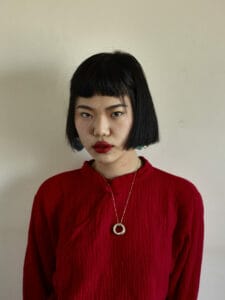
Please introduce the various book collections you provide.
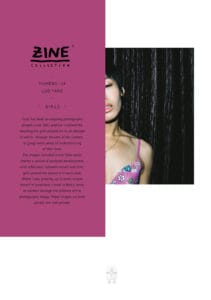
I have first started with the “Zine” Collection, which is a synthesis of what I saw in the 1970s in Japan and in the USA. The objective was to maintain the simplicity of execution while reworking it at the same time. Each volume is made of Fedrigoni paper, which is amongst the oldest paper manufacturers (1717). They necessitated manual work, such as assembling butterfly clips, and adding embossing seals with the editions’ logo. There are in total 27 volumes limited to 300 editions each. All comprise one signed print of a limited edition. They are almost all sold out now. I decided to publish only 27 volumes because it gives you the possibility to renew things, to keep your audience on track. Most importantly, it allowed me to build a strong, functional professional network around the world.
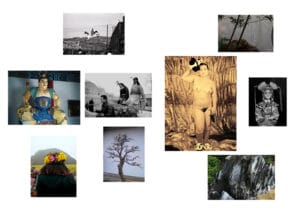
Then in 2015 I launched the “Bespoke” series, which are hardcover publications still focusing on one single artist each time. « In Hoc Libra Vinces » is the new concept [informed by the original Latin phrase In hoc signo vinces that means “In this sign you will conquer”], which is accompanied by the symbol of a Dragon and the letter “B” standing for “Bessard”. These are beautifully crafted books, using off set printing, and include also an original and signed print inside. I am planning to publish around 20 Bespoke books, and then as usual I will start something new.

The “Guest Stars” publications are those published by other publishing houses, which I wanted to promote for the quality of the book design and the artist showcased. It should be noted that I don’t work with a unique printer: depending on the project I will get in touch with a specific printer based in China or Italy for instance. These books are chiefly available through my website. I rarely distribute them in bookshops because I believe booksellers have to deserve authors. In other words, I have emphasised on the direct relationship with the customers, who can be based in France, Germany, Japan, USA, amongst other countries.
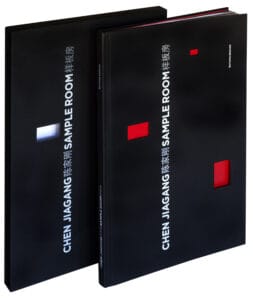
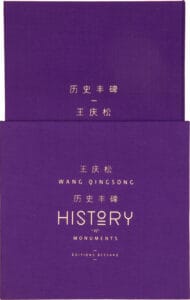
A fair number of the monographs you have published introduce Chinese artists, such as « This Face » by Xu Yong, « The brightest light runs too fast » by Ren Hang, « Hidden Track » by Lin Zhipeng, « History of Monuments » by Wang Qingsong, « Sample Room » and « Three Years » by Chen Jiagang, « Mengxi » by Wei Bi, and « The critical conditions of my… » by Han Lei. What is your relationship with contemporary photography in China?
Firstly I have lived in China many years, I love this country, its cuisine, its culture, its teas, its furniture, all of it. I always get in touch with the artist I am interested in. My “eye” guided me thus far. I usually meet them when I am in China; otherwise they come to visit me in Paris. I also have a personal collection of contemporary and vintage photographs of China. For instance, the owners of the Beijing-based White Night Studio (白夜照相馆, created by Yang Wei 杨威 and Wang Xu 王旭) help me acquire vintage prints from the 1950-60s. In this regard, we are planning to publish reproductions of these types of old photographic albums.

Portrait of Yang Wei and Wang Xu, founders of the White Night Studio
In regards to contemporary Chinese artists, in some cases I purchase their camera once the book is done, in other cases they offer me original negatives, prints, or even objects. For instance, I possess Philippe Herbet’s 6×6 Rolleiflex, Hester Scheurwater and Max Pam’s camera, 223 promised to give me his camera too. In a similar fashion I suggested to Ren Hang to buy his camera: we went for a walk together, he took several pictures, rewound the film, and gave it to me.
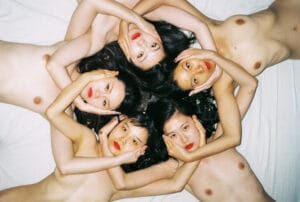
I was the first to publish a fair number of these Chinese contemporary artists, such as Zhu Mo and No.223 [Lin Zhipeng]. I was amongst the first in the West to promote Ren Hang’s works through a book that comes with a thermal cover which only appears at higher temperatures [in order to bypass Chinese censorship]. Ren Hang is about to be published by Taschen, and I am very proud to have supported him thus far.


Tell me more about your graphic design standpoint.
Each book is created by a different graphic designer so as to explore a specific graphic universe each time. It reflects my interest in creativity. Since my childhood, I have been creating paintings, collages, films, and photographs, I visited countless museums and have a collection of over 5000 books at home.
In truth I have collaborated several times with Ramon Pez [an award-winning art director with almost a decade of experience in magazine direction, book-making, exhibition design and illustration]. We made Ren Hang’s monograph together to cite one example. We met in 2012. At that time, I selected Cristina De Middel’s “Afronauts” as one of the best photo-books of the year, and it happened to be designed by Ramon Pez. Since then, we have collaborated on several publications. I was the first official publisher with whom he worked with. We get along very well and he has free rein on the book design.
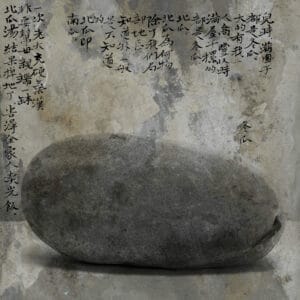
What interest me the most is how a book is conceived and structured, how images connect with one another. I like the idea to structure a book like a movie; images are selected not necessarily for their formal aspects but rather because they create a meaningful visual narrative. Each time we try to think outside the box, to push boundaries further. When one looks at all the books I have published thus far, one would realize that all have differing look, design, typeface, paper, narration, and structure. The typefaces I have been utilizing are all original creation by typographers. I am informed by several Professors for typeface design, who advise me about the history of typeface, its political, cultural and social impact. The goal is to produce publications that go beyond the anecdotic, and instead create something that is beautiful and meaningful.
Several years ago, you produced your own photographic surveys (“Journal de Chine”, “Wuhan boiler company workers”, “Behind China’s Growth”). Are you still interested in doing this?
Of course. I am currently preparing a project on North Korea, on the one hand it will chronicle a story addressing a period between 1945 and 2002, on the other I will include a 15 days diary that will be populated with photographs, collages, paintings, and texts of my own. Each page represents one day, in which the juxtaposition of image and text tells a specific story. I have adopted an historical approach. In fact in the course of my multiple travels to Korea (over 20), I have brought back countless records. I was one of the rare Westerners to have the chance to meet Kim Il-sung several times and to photograph him when he was still alive. I even transmitted the first ever photo-telegraphy from North Korea to Hong Kong back then. On another note, I am very proud because “Wuhan boiler company workers” is included in the authoritative Martin Parr’s publication entitled “The Chinese Photobook: From the 1900s to the Present” (New York: Aperture, 2015).

 If you were not a publisher, what would you be?
Everyone told me the same thing and I quite agree: rentier [laugh]. I have the feeling that I have never properly worked in my life because I have never been a subordinate of superior managers whatsoever.
What’s next for the Editions Bessard?
There are several projects I am currently working on. I have several ongoing books, including “Idissey” by Stéfano De Luigi, “KaBoom” by Andrea Botto, and others in collaboration with Joan Fontcuberta, Mariken Wessels, and Rob Hornstra to name only a few. I am preparing another volume on the Chinese Xu Yong with whom we are selecting exclusive images from his “Negatives” series. I am working on a photo-book on the notorious refugee camp in Calais (France). In addition, we are preparing a comic book on North Korea with Ramon Pez. I am also planning to release soon a book that examines a French 3-star Michelin Chef through unusual photographs taken by the Italian artist Carmen Mitrotta. I have scrutinized food photography the last three years, and she made the difference. I am hoping to continue the artist residencies in Beijing. I am developing ties with universities, galleries as well as with a famous luxury brand. My next goal is to be able to reach a larger audience, to expand outside the realm of specialists.
BY MARINE CABOS Here the link: http://photographyofchina.com/blog/interview-pierre-bessard
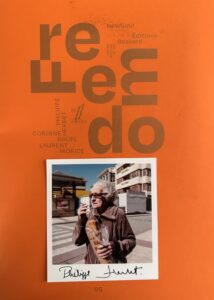
Signed c print on. the cover Philippe Herbet propose dans...