Posted on Leave a comment

A book to come soon: Three Years by the Chinese artist Chen Jiagang: 172 pages, 375mm x 245mm (Landscape) Gate out A: 1050mm (2×375 +300) x 245mm Gate out B: 1350mm (2×375+2×300) x 245mm)

A Tale of a City-Shanghai
A Few Points Regarding the Shanghai Shoot

Beginnings: In the past thirty years, China, Shanghai in particular, has seen great development, one of the greatest shifts in thousands of years. But one must never forget why he set out in the first place, simply because he went too far. In this large scale urban reconstruction, many things have been lost, to the point that many people have begun to ask, where did we come from? What are we doing? Where are we going? Thus, we need to use artistic methods to connect those disappeared memories of the city, to explore those meaningful tangents in this cultural rift.
Concept: I have always wanted to seek out a certain philosophical relationship between the majority and the minority. This relationship seems to figure importantly in modern Chinese history. Our photo shoot this time is split into three historical phases: the black-and-white Republican era, the red classic era and the golden contemporary era. During the black-and-white Republican era, a minority of foreigners and Chinese compradors influenced the majority through their modern lifestyle. In the red classic era, the ideals of a minority were realized through the majority, and the foundation was laid for today’s soaring growth. The golden contemporary era is one where minorities and majorities influence each other and depend on each other, realizing the Chinese dream of economic strength.
Methods: This photography project mainly employs three methods. The first is capture photography. What is capture photography? In this method, we have our actors and extras randomly play out their assigned roles in a chosen setting, and when they reach the desired effect, we order them to freeze. We then make slight adjustments in positioning for greatest effect, repeating the process several times until we are satisfied enough to take the picture. This method allows for a union between people and place, creating a vivid image rather than a dull, arranged effect. The second is the living news drama method. The “living news drama” is a dramatic form with its roots in Shanghai opera. It arose in the years of Japanese occupation, when Shanghai leftists, aware that much of their audience was illiterate, produced plays to promote the resistance against Japan. Today, we use this method to act out the stories in their various settings and to interact with audiences to effect a passage to history, creating a cultural image of Shanghai past and present. The third method is both real and virtual, akin to the regular, cursive and wild scripts of Chinese calligraphy. Global photography today always pursues super-realism and fineness, like the regular script of Chinese calligraphy. We use varying speeds and actors to create photographic images that rest somewhere between the real and virtual, much like the cursive script of calligraphy, in an expression of our pursuit of history and the memories of a city.
Chen Jiagang
2013

Posted on Leave a comment

Guerlain donne carte blanche à JonOne (c’est mon pote et de Mai Lucas sa chérie! un projet ensemble) pour réinventer son flacon aux Abeilles on the website ladepeche.fr

La maison française s’associe au célèbre artiste graffeur américain le temps d’une collection d’exception, entre savoir-faire olfactif et sensoriel et street art. Le fruit de ce partenariat presque improbable sera proposé à la vente dès le 4 janvier prochain.


La rencontre insolite entre l’artiste new-yorkais et la maison française au sein du laboratoire créatif des Exclusifs Guerlain donnera naissance, dès janvier 2016, à trois flacons d’exception. Il s’agit plus particulièrement d’une réinterprétation de l’iconique flacon aux Abeilles, créé par Pierre-François-Pascal Guerlain en 1853 dans le cadre d’une commande spéciale pour le mariage d’Eugénie de Montijo avec Napoléon III.

Le flacon d’un litre a été confié à JonOne tel un mur vierge pour lui permettre de s’exprimer librement et d’inventer “sa grammaire colorielle”. En résulte une explosion de couleurs, déclinée en trois tons différents : bleu pour “Shalimar, Extrait”, rose pour “La Petite Robe Noire, Extrait” et orange pour “Rose Barbare, Eau de Parfum”.

Tous les flacons proposés ont été réalisés dans l’atelier de JonOne à Paris. Ils ont été revisités un à un et signés de la main de l’artiste, faisant de chaque bouteille un objet d’exception unique. La touche Guerlain demeure sur ces flacons aux Abeilles grâce au ruban de satin qui vient entourer le col du flacon de chaque fragrance.

Dans le cadre de ce partenariat exclusif, la maison Guerlain proposera du 4 janvier au 28 février 2016 une exposition de JonOne dans la boutique mythique du 68, avenue des Champs-Elysées (Paris VIIIe).

Ce n’est pas la première collaboration du graffeur avec un acteur du monde de la mode ou de la beauté, puisqu’il s’est récemment associé avec la marque Lacoste le temps d’une capsule de prêt-à-porter.

La collection Guerlain x JonOne sera proposée dès le 4 janvier prochain. Chaque flacon aux Abeilles sera numéroté et signé, et édité en 34 pièces pour “Shalimar” et 32 pièces pour “La Petite Robe Noire” et “Rose Barbare”. Prix : 9000€

HERE THE LINK: http://www.ladepeche.fr/article/2015/12/09/2234697-guerlain-donne-carte-blanche-jonone-reinventer-flacon-abeilles.html

Posted on Leave a comment

Censured by the Chinese goverment How it goes/Comment ça marche la censure en Chine, explication du retard:

After having received and having approved Proofs of the Chinese artist 223 this summer 2015, I received email of the Chinese printer saying to me that the book was censured: see the message below from the printer:

Dear Pierre " I understand, as you know, in China the printing is very strict 
which controlled by the government. The nude and pornographic image can 
not printed in China.
 
I explained to the government this is an art book, but it relates to the pornographic content. "

AND NOW since this “tragedy” event all my Publish Agreement  has were changed, on all my contracts/publish agreement I have a new paragraph about the censure:  According to Chinese government regulations, prior to printing we are required to submit materials containing sensitive content for approval to export. Sensitive content includes: politics, maps, nationalism, religion, and overtly sexual images. Please notify us if your publication includes sensitive content so that we may apply for approval early to avoid delays. We reserves the right to decline any orders which include sensitive content as mentioned above. Thank you for understanding.

Voilà pourquoi j’ai pris du retard sur ce livre, nous l’imprimons en Italie, j’attends les nouveaux proofs de l’imprimeur pour lancer le OK to Print!

Posted on Leave a comment

Censured by the Chinese goverment, a photobook to come very soon: Hidden Track by 223 with a design by Ramon Pez

Censured in China we decided with Ramon Pez, the great designer to print this one in Italy

EXtrait:

" I understand, as you know, in China the printing is very strict 
which controlled by the government. The nude and pornographic image can 
not printed in China.
 
I explained to the government this is an art book, but it relates to the pornographic content. "
Posted on Leave a comment

A photobook to come soon, Hidden Track (the artist Edition) by 223 and design by Ramon Pez

Censured in China we decided with Ramon Pez, the great designer to print this one in Italy

EXtrait:

" I understand, as you know, in China the printing is very strict 
which controlled by the government. The nude and pornographic image can 
not printed in China.
 
I explained to the government this is an art book, but it relates to the pornographic content. "
Posted on Leave a comment

A book to come soon: Three Years by the Chinese artist Chen Jiagang: 172 pages, 375mm x 245mm (Landscape) Gate out A: 1050mm (2×375 +300) x 245mm Gate out B: 1350mm (2×375+2×300) x 245mm

EXTRAIT: Double Rhapsody
–    On the two Chinas most widely disseminated across the world

Two statements: two stories of China. One is about Chinese manufacturing, the other about China’s cultural landscape. The photos in the first statement were taken at the Yiwu Small Products Market, a major logistics and trading centreer for consumer goods in China. I wanted to photograph the material fantasy of the production and trade of consumer goods. The photos of the second statement were taken in Hangzhou and Huangshan. I wanted to photograph the storied past of these two places, cutting across the natural and human legends of the ages. How did I do that? How do you capture great wisdom in minutia, or look upon the ancient through the contemporary? I thought about it for nine months before finally finding the “three- shot” method. Ancient China had this idea of the triple screen, and in the West, they had the triptych. Lao Tzu said: the Dao begets one, one begets two, two begets three, and three begets the myriad things. In ancient Chinese philosophy, three was infinity, the greatest number, so by taking three independent yet related photographs, I am able to engage in a penetration of space and time into history. I think that this is a breakthrough, an expansion of the boundaries of photographic vision.

Chen Jiagang, March 17 2012

二言三拍
——关于在世界上传播最广的两个中国

二言:就是讲两个中国故事,一言是讲关于中国制造,二言是讲人文风月。一言这组照片就是在中国小商品的集散批发地义乌小商品城拍摄的。我想拍出小商品的制造和交易的物质幻象。二言这组照片是在杭州和黄山拍摄的。我想拍出历史上和这两个地方有关的风花雪月的往事。穿越人文与自然的千年传奇。那怎么拍呢?怎样拍小而知大,怎样拍今而怀古。我想了九个月,终于我找到三拍的方式,古代讲三屏,欧美讲三联。老子曰:道生一,一生二,二生三,三生万物。故在中国古代的哲学概念中,三是无数,就是最大,故拍三张既独立又关联的三张照片就能实现空间的穿越和时间的历史。我想:这就是摄影视觉的边际增长与突破吧。

2012-3-17 陈家刚

Posted on Leave a comment

Polycopies contó además con la presencia de fotógrafos tan polifacéticos como el ex-skater californiano Ed Templeton, que no París Photo : La fotografía inesperada por Xandre Rodríguez on the blog elasombrario.com dudó en firmar los ejemplares de Aventures in the Nearby Far Away (Éditions Bessard), un libro en forma de acordeón que, desplegado, alcanza casi ocho metros y medio de largo.

‘Paris Photo’, la principal cita fotográfica de Europa en otoño, tuvo este año su edición más triste y efímera por los atentados del 13 de noviembre. Aun así, el festival conoció momentos mágicos y especialmente emocionantes que demuestran que unos Kalashnikov no pueden callar la vitalidad cultural de París. Es momento de repasarlos.

El 13 de noviembre, París enmudeció de nuevo ante el ruido de los Kalashnikov. Un macabro déjà-vu que, con el recuerdo del atentado contra el semanario Charlie Hebdo aún reciente, dio por concluidas las principales manifestaciones artísticas de una ciudad que continúa llorando a sus muertos.

Noviembre suele aparecer en el calendario de cualquier amante de la fotografía junto a un billete con destino a la cuidad europea que mejor ha acogido este arte: París. En este sentido, el Festival Photo Saint-Germain, organizado por la periodista Virginie Huet y la comisaria independiente y cofundadora de TEMPLE, Aurélia Marcadier, fue el primero en reunir a algunos de los grandes actores del mundo de la fotografía en la conferencia La page imprimée: la photographie vue par les éditeurs, en la que editores independientes y especialistas en fotolibros como Pierre Bessard (Éditions Bessard), Clément Kauter (Plac’art Photo) y Marcel Feil (Foam Magazine) debatieron principalmente sobre el papel del editor ante el auge de la autoedición. Centrado en la exclusiva rive gauche, el festival trató de reivindicar una edición más el potencial artístico del barrio de Saint-Germain-des-Prés frente a otros enclaves culturales como LE BAL, ubicado en el norte de París.

No obstante, el grueso de las exposiciones de Paris Photo sigue concentrándose en el Grand Palais. En su interior, Daido Moriyama y Nobuyoshi Araki desafiaron el tradicional minimalismo japonés con dos propuestas tan megalómanas como interesantes. El primero, representado por la galería Jean Kenta Gauthier, mostró el set definitivo de Farewell Photography (1972) con las 80 fotografías de los negativos que sobrevivieron a la quema, mientras que Araki (Taka Ishii Gallery) se decantó por una imponente instalación formada por 2.016 polaroids.

 Daido Moriyama “Farewell Photography”, 1972 Photo: © Martin Argyroglo, courtesy Jean-Kenta Gauthier.

Por otra parte, la Galerie du Jour, capitaneada desde hace más de tres décadas por la incombustible Agnès b., volvió a colgar algunas de las instantáneas más vanguardistas de la feria gracias a apuestas tan certeras como Chris Shaw, Sheila Rock y Kenneth Anger. En esta línea, la australiana Tolarno Galleries -que el año pasado consagró la totalidad de su stand a Bill Henson- destinó esta vez parte de su espacio a la obra de Tim Johnson, cuyo voyeurismo y espontaneidad parecieron rivalizar con la serie From Window de Masahisa Fukase, exhibida durante la última edición de los Rencontres de Arlés.

Por desgracia, la magnitud de los trágicos atentados del pasado 13 de noviembre obligó a los 30.000 visitantes previstos para el fin de semana a conformarse con una visita virtual de Paris Photo tras la decisión de la organización de clausurar definitivamente la edición más efímera (y triste) de la feria.

Una decisión que, al igual que en Offprint, también afectó a editores como André Frère, que este año confesaba recoger los frutos del trabajo de anteriores ediciones con la presentación del último libro de Antoine d’Agata (AiTHŌ) y el proyecto Cosmos de la joven Bérangère Fromont.

Con el estado de excepción impuesto por François Hollande y los principales establecimientos culturales cerrados por orden del Ministerio de Cultura y Comunicación, los escenarios de la masacre pronto se convirtieron en improvisados platós de televisión, ocupando toda la atención mediática.

Sin embargo, algunas citas tan ineludibles como Polycopies se mantuvieron hasta el final reuniendo un año más a una treintena de editoriales entre las que repitieron las españolas Dalpine y Ca l’Isidret, sin olvidar el debut de Terranova. Polycopies contó además con la presencia de fotógrafos tan polifacéticos como el ex-skater californiano Ed Templeton, que no dudó en firmar los ejemplares de Aventures in the Nearby Far Away (Éditions Bessard), un libro en forma de acordeón que, desplegado, alcanza casi ocho metros y medio de largo.

Quién se iba a imaginar que, el día después de la tragedia, el reencuentro con todos los que se acercaron de nuevo al Concorde Atlantique sobrepasaría con creces el mero interés por los fotolibros para convertirse en un gesto casi terapéutico.

Si a principios de año todos fuimos Charlie (“Je suis Charlie”), la reacción ciudadana tras la masacre del 13-N animaba a salir a la calle y ocupar de nuevo las terrazas (“Je suis en terrasse”) para intentar recuperar así cierta normalidad. Un gesto simbólico que el galerista Alain Gutharc llevó aun más lejos encabezando una iniciativa que consistió en proponer a una treintena de galerías parisinas recrear durante el pasado 28 y 29 de noviembre de forma total o parcial los stands que tenían expuestos en Paris Photo.
Y es que, como el propio lema de la ciudad indica, París “es batida por las olas, pero no se hunde”.
MONEYSHOT. Desde entonces, también he sido responsable de la sección de Arte y Cultura de la revista Wrong Magazine y realizado otras colaboraciones con ‘Dazed & Confused’ y ‘Catch Fire’. La decisión de instalarme en París hace cinco años, me está permitiendo además formar parte de una intensa escena cultural en la que poder promover y visibilizar el trabajo de grandes profesionales, dirigiendo actualmente algunos de sus proyectos artísticos.
HERE THE LINK http://elasombrario.com/paris-photo-la-fotografia-inesperada/
Posted on Leave a comment

Hester Scheurwater last work: « All I Ever Wanted » limited edition of 500 copies, signed copy!

The Self-obsessed photo series, which explores Hester Scheurwater’s desires, obsessions and fears sparked media hype in the Netherlands. The explicit imagery shocked many and fueled debate on the sexualization of society. Zurich-based curator, writer and contemporary photography specialist Walter Keller compares it to Rober Mapplethorpe’s sexually-charged imagery or Francesca Woodman’s erotic mise-en-scene.”Scheurwater’s visual self-explorations extend the boundaries of another main topic in art history and photography – the pose. But in her pictures, model and artist are one,” says Keller. “Yes, this is sexually explicit work, but even more, it is a curious and smart research about herself, where the artist looks at herself from both sides of the mirror.”

Posted on Leave a comment

All I Ever Wanted by by the Dutch professor and photographer Hester Scheurwater, a Limited Edition of 500, Signed Copy.

Loring Knoblauch about the book:

« While this photobook may be more sexually explicit than some readers will be comfortable with, it’s a natural extension of Kim Kardashian’s Selfish, but seen with the acerbic and questioning eye of an artist. She’s hyperbolized and hypercharged the kind of female objectification and fake identity we have become accustomed to seeing, and yet it somehow passes for almost normal; its satire is so convincing that it persuasively stands in for the real thing, and that dissonance is powerful. For those who have been waiting for a photographer to critically engage the wider phenomenon of the selfie,  Scheurwater’s bluntly audacious photobook is memorably biting. She’s given us the mannered freedom and sexiness we’re supposed to want (or want to be), incisively exposing the two poles of exhibitionism and voyeurism that now dominate the Facebook-age. »

From the review by Loring Knoblaub for Collector Daily

Posted on Leave a comment

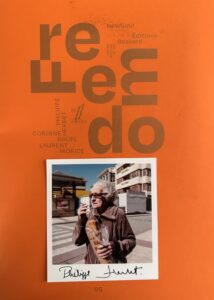
Ivan Sergueïevitch Tourguéniev, les filles de Tourguéniev by Philippe Herbet

A “Turgenev girl” is a particular type of female character invented, or rather documented, by the 19th century writer Ivan Turgenev.

Photographer Philippe Herbet tells the story of his project: « A few years ago, in Vladivostok, my friend Irina had spoken to me about the Turgenev girls, with whom she felt very close. »

A “Turgenev girl” is a particular type of female character invented, or rather documented, by the 19th century writer Ivan Turgenev. « We had listed the peculiarities of today’s Turgenev girls: delicate manners, modest, refined, simple, romantic, living in their dreams, feminine, though with no make up… »
« She’s neither vulgar nor provocative, nor sexy, dressed with retro fashioned – even vintage – clothes, fond of literature, of classical music, playing an instrument, speaking several languages (often French and Italian), waltzing, blushing when they hear rude remarks, they have well established and strong moral principles, they are devoted, they come from several social classes, they are not part of any network, » Philippe says.
It’s proved by the quotes from Turgenev: “There was something innately special in the constitution of her somewhat dark, round face with small, thin nose, almost childlike cheeks and black, bright eyes. She was gracefully formed, but somehow not fully developed.” (Asya, 1858)
“I never saw a being more mobile. She did not sit still for one moment, was constantly getting up, running to the house and back, humming in a low voice, laughing often and in a strange way: she seemed to be laughing not at what had been said, but at other thoughts that had entered her head. Her large eyes looked straight ahead, bright and bold, yet sometimes the eyelids squinted, whereupon her gaze suddenly became profound and gentle.” (Asya, 1858)
Turgenev wrote the short story Asya in 1858, while in the middle of working on Home of the Gentry. It was during this highly creative period that Turgenev gradually came to occupy a leading position in Russian literature.
In this story Turgenev draws largely on Pushkin’s canonical image of the archetypal Russian woman — Tatyana Larina, with her bright, natural, undisguised feelings, which generally do not find an adequate response in a male environment. She is an introvert, but one with an artfully arranged inner world and mobile psyche.
“She had turned twenty a while ago. She was tall and in possession of a face both pale and swarthy, large gray eyes under round eyebrows surrounded by tiny freckles, a forehead and nose that were perfectly straight, a compressed mouth, and a rather pointed chin. Her dark blonde plait hung low on her delicate neck.” (Elena Stakhova from the novel On the Eve, 1860)
“Throughout her entire being, in her facial expression attentive and a little timid, in her unsteady gaze, in her smile that seemed strained, in her voice quiet and uneven, there was something nervous and electric, something impetuous and hasty; in short, there was something that could not possibly please everyone and that some even found repellent.” (Elena Stakhova from the novel On the Eve)
Her nature is most fully revealed in the vicissitudes of love: she faithfully follows her beloved regardless of her parents’ disapproval or other circumstances. Sometimes she overestimates a man’s spiritual qualities and falls in love with someone unworthy of her.
“But her whole being exuded something strong and audacious, something impulsive and impassioned. Her legs and hands were tiny, her firmly and flexibly formed diminutive body resembled the Florentine statuettes of the 16th century; she moved with graceful ease. (Marianna Sinetskaya from the novel Virgin Soil, 1877)
“She spoke little, listened and gazed attentively, almost fixedly, as if wanting to be aware of everything. She often remained motionless, lowered her hands and became pensive; at such moments her face expressed the inner workings of her thoughts …” (Natalia Lasunskaya from the novel Rudin, 1855)
What does contemporary Turgenev girl look like according to the author of the photos Philippe Herbet? « Today this stereotype is distorted, it means a kind of girl idealistic, soft, old-fashioned, wearing vintage clothes, sentimental, poetic and subtle, living in her dreams… she has some difficulties to live in the contemporary world. I intend to make a series of portraits in their living environment, scenes related to their favorite activities, and some « landscapes », between Moscow and southern Russia countryside. »
HERE THE LINK: http://rbth.com/multimedia/pictures/2015/12/07/turgenev-girls_548419
Posted on Leave a comment

Marc Veyrat a saccagé la nature pour bâtir un complexe « écolo » dans les Alpes par Louis Germain du journaldelenergie

Comparaison de l’état de terrains appartenant à Marc Veyrat à Manigod avant et pendant les travaux à la Maison des Bois. Photo satellite de gauche prise avant les travaux, Google Earth, 2009. Photo satellite de droite prise pendant les travaux, Géoportail, IGN, 2013.

here the link: http://journaldelenergie.com/environnement/marc-veyrat-saccage-la-nature-pour-batir-un-complexe-ecolo-dans-les-alpes/

Posted on Leave a comment

Environnement Marc Veyrat a saccagé la nature pour bâtir un complexe « écolo » dans les Alpes par Louis Germain du journaldelenergie

ENQUETE. La justice reproche au cuisinier Marc Veyrat, « ambassadeur » de la Fondation Nicolas Hulot, d’avoir rasé une parcelle de forêt dans un espace naturel protégé et détruit une zone humide, lors de l’aménagement à Manigod (Haute-Savoie) d’un complexe touristique luxueux sur ses terres. Le chef étoilé mondialement connu devra répondre de ces faits, qu’il nie en bloc, devant le tribunal correctionnel d’Annecy vendredi 27 novembre.

Par Louis Germain

L’emblématique chef savoyard au chapeau noir Marc Veyrat, a ouvert en septembre 2013 la Maison des Bois, un restaurant avec chambres d’hôtes au cœur des Alpes, dans le massif des Aravis. Entourée de forêts d’épicéas et de prairies d’alpage à 1500 mètres d’altitude, offrant une vue panoramique sur le Mont Blanc et les Alpes, la Maison des Bois s’inscrit dans un cadre naturel extraordinaire et très protégé, sur des terres appartenant à la famille Veyrat depuis plusieurs générations. Pour goûter les mets locaux et bio de la Maison des Bois, il faut débourser entre 150 et 365 euros par personne, sans les boissons. Une nuit à deux sur place coûte entre 520 et 1250 euros.

« J’ai fait trois ans de travaux ici. J’ai le syndrome des architectes : rien n’est jamais vraiment fini »

Autour du restaurant installé dans un ancien chalet d’alpage, a été aménagé un véritable hameau. Dans une ambiance de ferme de montagne, des chalets abritent des suites luxueuses. Une piscine intérieure, un spa taillé dans la roche, un hammam et un sauna sont à la disposition des hôtes. Marc Veyrat a aussi installé des bassins, construit une serre, une chapelle, un four à pain, un rucher, une grange, un parcours botanique et projetait de réaliser un amphithéâtre. Mais plusieurs de ces aménagements ont été implantés en pleine zone naturelle et sans autorisation. Marc Veyrat expliquait à l’ouverture du lieu en 2013 : « J’ai fait trois ans de travaux ici. J’ai le syndrome des architectes : rien n’est jamais vraiment fini »[1]. En mars 2015, le restaurant a été détruit par un incendie et l’établissement ne devrait rouvrir ses portes qu’à l’été 2016.

Les atteintes à l’environnement ont eu lieu dans un espace naturel remarquable et menacé
Marc Veyrat va devoir répondre devant la justice du défrichage sans autorisation d’environ 7000 m2 de forêt et de la dégradation de près de 12.000 m2 de zone humide naturelle entre 2012 et 2014. « Une atteinte inacceptable à l’environnement de notre territoire », estime la Fédération Rhône-Alpes de protection de la nature (FRAPNA) de la Haute-Savoie. Les terrains où ont eu lieu ces dégradations se situent dans une Zone naturelle d’intérêt écologique faunistique et floristique (ZNIEFF), qui comprend des « secteurs de grand intérêt biologique ou écologique »[2]. Cette zone de moyenne montagne composée de forêts, de landes et de pelouses très humides est un espace naturel remarquable et menacé.

Marc Veyrat a fait raser une parcelle de forêt, qui a été défrichée puis remblayée afin d’édifier un amphithéâtre, dédié à l’acteur Jacques Weber. Le lieu « accueillera le public pour des démonstrations, conférences, et échanges autour des projets de la Fondation Marc Veyrat », lisait-on sur le site internet de Marc Veyrat en 2014, qui expliquait alors que sa fondation « proposera aux jeunes enfants des écoles, aux lycéens, et étudiants, une sensibilisation à la préservation de l’environnement »[3]. La déforestation a eu lieu dans une forêt d’épicéas, un espace naturel sensible qui abrite une faune importante : pic noir, chouette chevêchette, tétras lyre, chouette de Tengmalm et gélinotte. La valeur de cette forêt de montagne repose aussi sur sa capacité à retenir le sol. Elle constitue un rempart contre les glissements de terrain, les avalanches ou les chutes de pierres.


Retour sur le déroulement des faits : lors de l’été 2012, le service « environnement, eau et forêt » de la direction départementale des territoires (DDT) de Haute-Savoie a contrôlé les travaux à la Maison des Bois et a constaté la coupe à ras d’arbres sur une parcelle de forêt. Marc Veyrat a alors écopé d’un avertissement et devait replanter de nouveaux arbres dans les cinq années suivant la coupe. Or un an plus tard le même service de la DDT retournait sur les lieux et constatait que les souches des arbres abattus avaient été arrachées et que des travaux de terrassement avaient eu lieu. Me Nicolas Ballaloud, l’avocat de M. Veyrat, affirme que la zone de forêt rasée n’a pas été remblayée. Le cuisinier savait-il qu’il ne pouvait pas défricher la parcelle protégée ? Il le réfute formellement. Un arrêté préfectoral oblige pourtant à reboiser toute coupe à ras sur une zone supérieure à 5000 m2, dans les cinq ans suivant l’abattage, en Haute-Savoie.


Les arbres abattus étaient atteints par le bostryche, un coléoptère qui s’attaque aux épicéas, se justifie Marc Veyrat. Mais un bon connaisseur de l’endroit affirme que les épicéas n’y sont pas affectés par le nuisible. Faisant amende honorable, le chef cuisinier aurait replanté il y a environ un an 1300 arbres, notamment sur la zone défrichée, selon son avocat. Mais selon nos informations, les arbres ont été replantés dans la zone défrichée sans que les remblais ajoutés pour l’amphithéâtre aient été retirés.


La destruction la plus grave concerne la zone humide naturelle


La destruction la plus grave concerne la zone humide naturelle. Marc Veyrat est poursuivi pour avoir drainé, asséché et remblayé une zone humide naturelle, un lieu « strictement protégé pour des raisons écologiques », indique le Plan local d’urbanisme (PLU) de la commune de Manigod. Lors de l’été 2013 « la police de l’eau », l’Office national de l’eau et des milieux aquatiques (ONEMA), constate « une atteinte à une zone humide » sur les terrains de Marc Veyrat, zone sur laquelle les travaux sont pourtant interdits. Parmi les aménagements : trois bassins, des murets, une serre, un rucher, et un parcours botanique baptisé « Laurent Gerra », où Marc Veyrat dit avoir replanté 70 plantes de montagne pour sensibiliser les plus jeunes à l’environnement. La zone asséchée est une prairie humide de montagne qui possède une valeur écologique remarquable parce qu’elle abrite une faune et une flore rares et menacées. Exemple de ce patrimoine naturel : l’azuré de la sanguisorbe, un petit papillon bleu (une espèce protégée) qui a impérativement besoin pour se reproduire de la grande pimprenelle, une plante qui ne pousse que dans les zones humides. En outre, la zone humide a une fonction hydrologique cruciale. Comme une éponge, elle absorbe les pluies, limite ainsi les crues, l’érosion des terres et peut restituer l’eau lors d’épisodes de sécheresse. Les zones humides de montagne, c’est « le plaisir d’avoir des petits torrents, de l’eau qui coule, de l’eau fraîche que l’on rencontre lors de promenades », explique Fabien Perriollat, vice-président de la FRAPNA Haute-Savoie. Selon une source proche du dossier, l’assèchement de la prairie humide conduit par Marc Veyrat est irréversible. Près de la moitié des zones humides ont disparu en France depuis trente ans.


Là aussi, le chef haut-savoyard réfute catégoriquement toute destruction de la nature : « il n’y a pas eu d’aménagement sur la zone humide ». Tout au plus reconnaît-il la présence « d’un fossé de 15 mètres de long qui touche la zone humide ; on a mis des tuyaux pour faire passer l’eau ». Pourtant l’inventaire des zones humides de Haute-Savoie sur le site internet de la préfecture du département[4] montre sans équivoque que des travaux d’aménagement chez Veyrat se sont déroulés au cœur d’une zone humide naturelle.

Un inventaire qui n’était pas disponible, ni reporté sur le PLU au moment des travaux, plaide l’avocat de Marc Veyrat, qui reconnaît qu’un « petit triangle de la zone humide déborde sur la propriété de M. Veyrat ». Même si une zone humide n’est pas répertoriée, elle reste protégée par la loi. Pour cette infraction sur la zone humide, Marc Veyrat encourt au maximum une peine d’emprisonnement d’un an et une amende de 75.000 euros.


« Je n’ai détruit aucune zone naturelle ! Je n’ai fait qu’aménager un lieu magnifique »


Interrogé sur ces infractions à l’environnement, Marc Veyrat s’emporte : « Je n’ai détruit aucune zone naturelle ! Je n’ai fait qu’aménager un lieu magnifique où j’ai mes plantes, où les enfants viennent ». En novembre 2013, un contrôle rassemblant la gendarmerie, l’Onema et la DDT conduit à « une décision d’interruption des travaux » en raison du nombre important d’atteintes à l’environnement et de leur degré de gravité. Outre le défrichement de la forêt et l’assèchement de la zone humide, Marc Veyrat comparaît aussi en justice pour n’avoir pas demandé un permis de construire unique pour la construction de plusieurs installations[5]. « Chaque annexe prise individuellement ne nécessite pas de permis », affirme l’avocat du chef cuisinier.


Les paradoxes d’un grand chef


« Ambassadeur » de la Fondation Nicolas Hulot depuis 2005, Marc Veyrat multiplie dans la presse les déclarations d’amour à son « repère intangible » : la nature. A l’ouverture de la Maison des Bois, le chef étoilé a beaucoup insisté sur la nécessité de protéger l’environnement et de revenir à une alimentation naturelle. Sur un bâtiment de son établissement, on lit sur un panneau : « L’art de vivre la nature ». Mais d’un côté, Marc Veyrat tempête contre les « merdes vendues par les grandes surfaces »[6], de l’autre il travaille 15 ans avec le géant de la restauration collective Sodexo[7]. « Ma cuisine sera environnementale ou ne sera pas », jure-t-il mais apparaît dans une publicité vantant le jambon d’un industriel agroalimentaire[8]. Le cuisinier comparaît devant la justice ce vendredi pour avoir détruit des espaces naturels et participe à la préparation du déjeuner lundi prochain des chefs d’Etat à la conférence internationale des Nations unies sur les changements climatiques au Bourget (Seine-Saint-Denis). Détruire une zone humide naturelle pour aménager un jardin botanique (afin d’éveiller les enfants aux plantes de montagne), abattre des arbres pour installer un amphithéâtre (et y parler protection de l’environnement), jamais sans doute Marc Veyrat n’aura été aussi loin dans la contradiction.

HERRE THE LINK: http://journaldelenergie.com/environnement/marc-veyrat-saccage-la-nature-pour-batir-un-complexe-ecolo-dans-les-alpes/