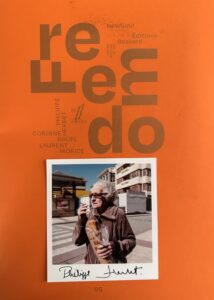
Editions Bessard is a paris-based independant publishing house created by pierre bessard in end of november 2011. Focusing on working with artists, writers and curators to realise intellectually challenging projects in book form.
The critical conditions of my awareness will sometimes trigger the shutter. The first condition that arose my interests towards photography is Chinese reality. So far until now, it is still the most convincing condition of my photographs. Usually I’ve always been carrying the over whelming sensitivity towards those indecent things. I see my photographs as a kind of concealing, which doesn’t require to emphasize any procedures or evident. I prefer to conceal the « punctum » of most of my photos. Have been trying to conceal the climax of these everyday photos, which is the most significant form and inner structure of my photos, the fragment of every image transit into another fragment, those concealed events can be memorized by myself as representation of time. Most times, I’m quite a conflict person, this kind of conflict will sometimes make me understand those attitude that’s in-between. I always take pictures in a quite conservative manner, it’s the biggest freedom to me, the critical conditions of my awareness will sometimes trigger the shutter. I never set up a pre-made idea to shoot with, that will be a even worse cliché. I prefer to let the « series » and « categories » be generated naturally from the huge quantities of my photographic practices.
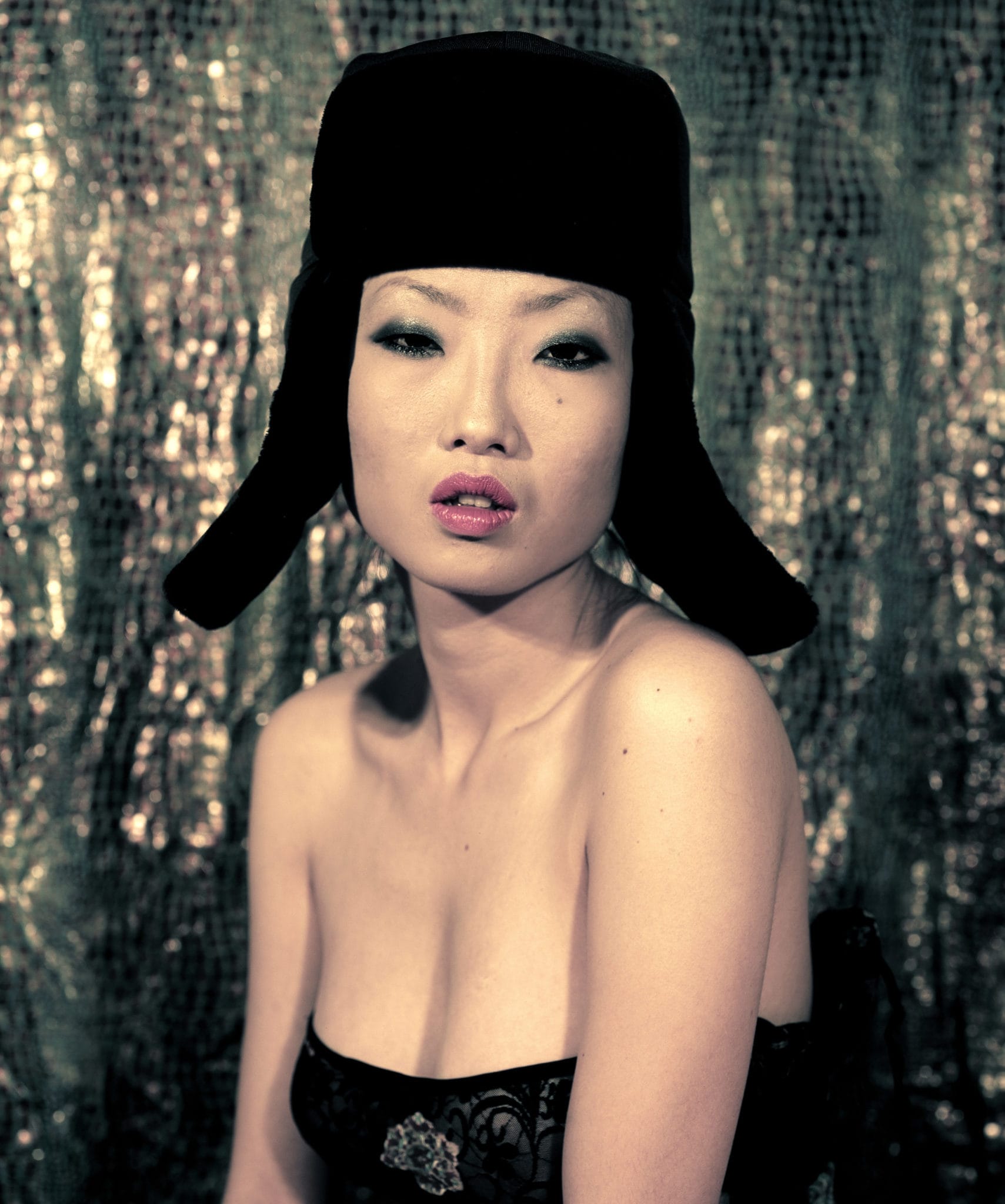
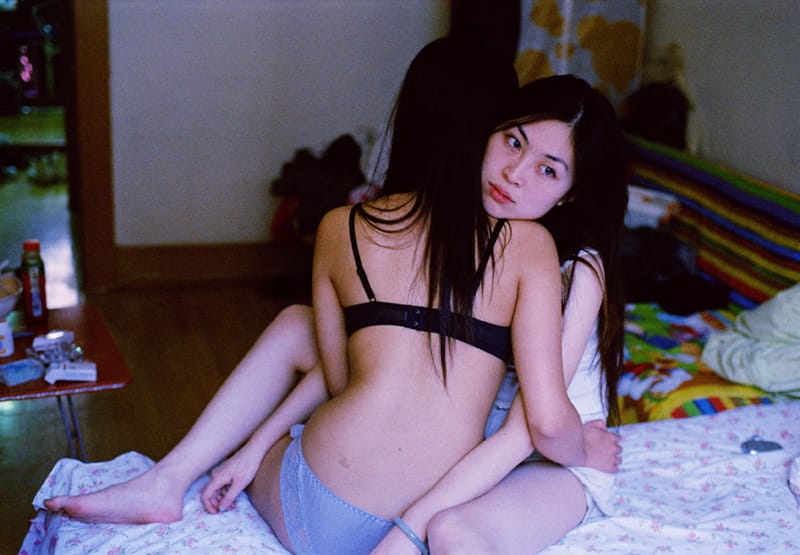
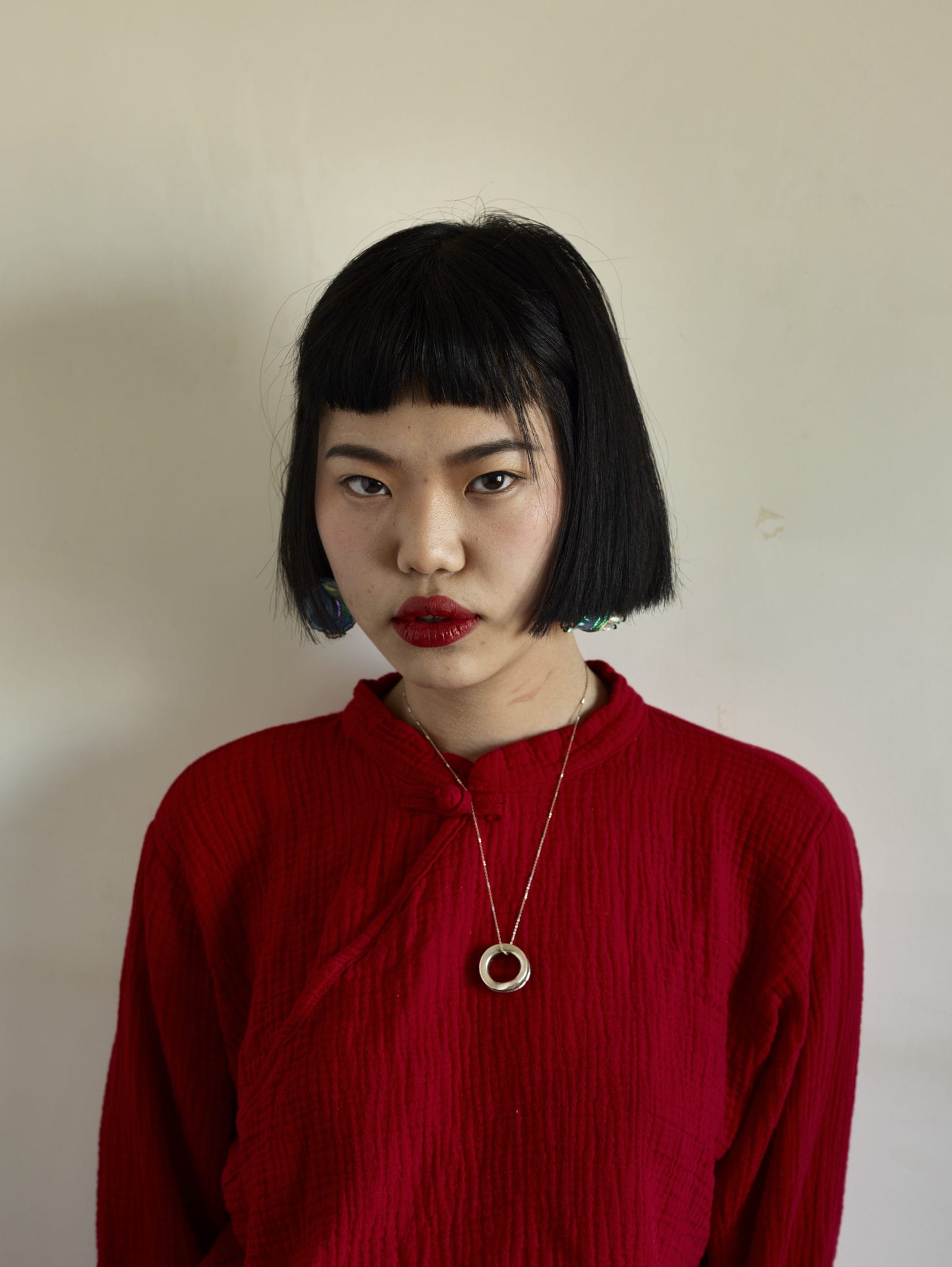
« Girls » has been an ongoing photography project since 2007, and has involved me shooting the girls around me in an attempt in which – through the lens of the camera – to grasp some sense of understanding of their lives.
The images included in the « Girls » series charter a period of personal development, with reflections between myself and other girls around me apparent in each shot. Whilst I was growing up, in order relieve myself of loneliness, I tried to find a sense of comfort through the stillness of the photographic image. These images are both private and non-private.
« Girls » is weak and fragile but also persistent and decisive, as the subjects depicted continue to face the tough process of inner growth in a reality ground in friction, full of hope and latent crisis. This duality of fragility and inner strength is a key component to the photographs, where the girls staging is cast into friction with their inner resistence and awkwardness towards being made a subject of. Their own portrayal, after all, is out of their own control, and yet I feel that in this very situation, there is a glimpse of real truth and beauty. Their world is one which is subject to the weight of age and, as the girls lives become intwined with their surrounding society, they find themselves rooted and engulfed within an ever advancing state of uncontrollable perceptions.
I hope that these fragments of lives depicted within my photographs will find a life less tainted within this world, and that therein the girls impending immersion into the struggles of adulthood will remain suspended.
Pieter Hugo est un colosse, dont les images sont chaque fois des chocs visuels, parce qu’elles vous regardent sans ciller, et que la franchise effraie quand elle n’attend pas de réponse.
Pierre Bessard, qui est son ami, lui consacre un ouvrage, intitulé de façon tendrement ironique Flat noodle soup talk, où les visages qui vous contemplent, en souriant, avec mélancolie, douceur, ou défi, sont autant de natures mortes. Pieter Hugo photographie des êtres ayant compris que son objectif les transforme en fantômes, à moins que, sans véritablement oser se le formuler, ils ne se soient toujours considérés, l’hypothèse n’est pas absurde, comme des ombres mouvantes.
Un fruit pourrit, il éclate, le livre s’ouvre, puis se ferme, dans une odeur de grenade écrasée. Des couples se sont mariés, des amants se sont étreints, des jeunes femmes se sont fait tatouer ou percer les joues, d’autres encore ont subi des opérations, ou s’apprêtent à dîner en famille. Il ne s’est rien passé, la vie a passé, la mort n’a cessé de travailler.
Ouvrez une noix, écartelez une clémentine, vous y verrez peut-être votre cerveau, ou votre visage, ou votre sexe, ou vos entrailles.
Pieter Hugo est un métaphysicien : il sait bien que chacun se bat contre la solitude, ou l’isolement, et que les jours sont généralement bâtis d’amertumes. HyperFocal: 0 Le matérialisme, marxiste ou consumériste, révèle son impuissance, incapable de combler notre besoin de consolation.
Une Mercedes caparaçonnée sort du garage, un enfant naît, des œufs se cassent sur le sol, une fissure apparaît au plafond, un vieil homme nu, couché, se prépare à ne plus revenir de son prochain sommeil.
Les corps nus chez Hugo sont émouvants, parce qu’ils ne jouent pas à être sensuels, et qu’ils montrent que la séduction est un combat que l’on mène vaillamment en le sachant perdu d’avance. Les rêves d’utopies politiques sont des histoires anciennes. Reste l’effort très beau pour se tenir debout, seuls ou ensemble, cuirassés de protections ou sans vêtement.
Pieter Hugo ne légende pas ses images. Nous sommes probablement en Chine, en tout cas en Asie, c’est-à-dire de l’autre côté du globe unifié par une dévastation que nous ressentons désormais à chaque instant, que l’on soit à Paris, Pékin ou au Cap. Et si chacun accepte ici d’offrir au photographe sud-africain son image avec la plus grande pudeur, c’est que peut-être, face à l’incommensurable vertige qu’impose un monde à l’agonie, ce sentiment expose sans le vouloir l’un de nos derniers noyaux d’humanité partageable, telle une ultime et modeste insurrection de l’espèce humaine face à la menace de son anéantissement. Pieter Hugo, Flat noodle soup talk, design and book concept Ramon Pez, éditions Pierre Bessard, 2016 – typeface Grot 10
HERE THE LINK: https://fabienribery.wordpress.com/2016/11/21/linsurrection-de-la-pudeur-par-le-photographe-sud-africain-pieter-hugo/
“Now let us, by flight of imagination, suppose that Rome is not a human habitation but a psychical entity with a similar long and copious past — an entity, that is to say, in which nothing that has once come into existence will have passed away and all the earlier phases of development continue to exist alongside the latest one.”
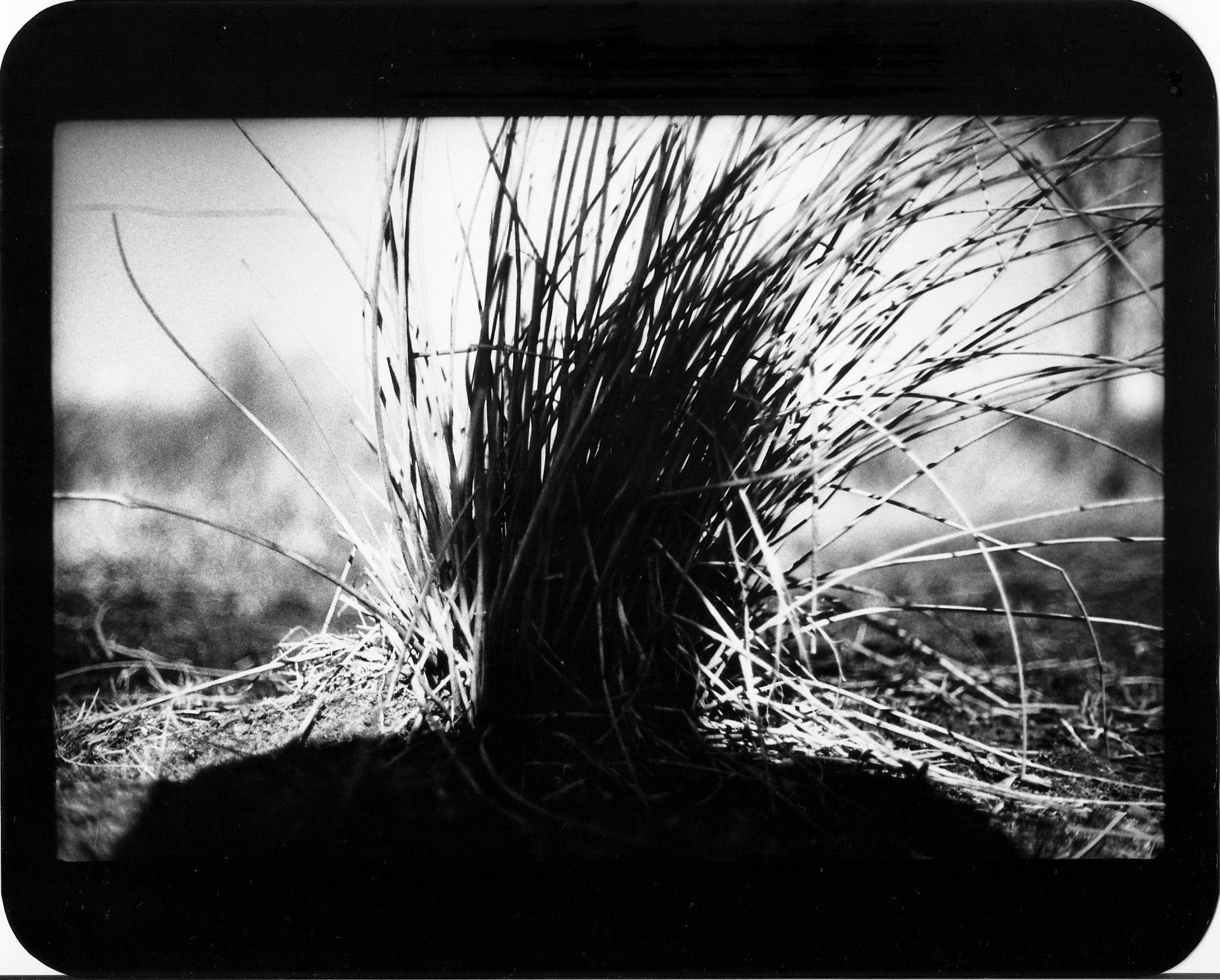
” I started working on the Self Portraits series in 2010. I was shooting in Italy in the summer and while looking for animals to photograph in the countryside, I looked through the camera and saw a reflection of my shadow on an unpaved road against a mountain. It was a clear day and I was not far from the place where I was born. From that moment, I decided to build a project on myself. No more people or animals to chase, no more sneak shots of strangers, all I needed now was right in front of me, still, posed, shouting for me to just press the button. So for three years and hundreds of sunny days, I wandered around the countrysides of Italy and the United Kingdom, posing different shadow positions in front of the camera. As the project progressed, I started to construct my pictures as though the shadows were an integrated element of the landscape that were coming to life because of my interaction with the environment. Working with a removable viewfinder camera, a Miranda that once belonged to my father, the photographs were taken from a waist level perspective, casting my reflection onto natural, organic surfaces as grass, soil, rocks, hay, plants and trees.
I loved working with these textures and the way they responded to my presence and what they gave back in return, was continually fascinating. I came across many different surfaces: green and leafy, white and rocky, yellow and grassy, brown and woody. It was the act of casting my black presence onto colours and shapes that kept me shooting images. Seeing my shadows distorting, taking form and coming to life against the sunshine, was like being in my darkroom, printing with hands and body, under the light of the enlarger. Moving around while taking pictures of my shadow was like marking the territory, exploring a new, fragile dimension made out of nothing but light”.
Where: Bateau Concorde-Atlantique Berges de Seine – Port de Solferino 75007 Paris The boat is located between the Pont Royal and the footbridge Solferino – L.S. Senghor. When: Wednesday 09 November 12:00 – 21:00 / Opening reception 18:00 Thursday 10 November 11:00 – 21:00 Friday 11 November 11:00 – 22:30 / Polycopies reception* Saturday 12 November 11:00 – 18:30
Since 2014 Polycopies has been hosting every year a selection of 35 specialised international photo book publishers. Founded and directed by Laurent Chardon and Sebastian Hau, Polycopies is an association for the distribution and promotion of the photographic edition, which for four days during Paris-Photo becomes a large ephemeral bookshop, a space completely dedicated to photo books. Although Polycopies is first of all a market place, it has also become an important place to meet where a lively crowd of amateurs, collectors, photographers and publishers of different horizons share and confront their ideas on photography, better understand the stakes of publishing, exchange on discoveries made and favorite books, or even show their book dummies and see new projects come to live.